
Farm

We fought for a long time and made a dream come true: we have become a Completely Independent Agricultural Craft Brewery.
Being an Agricultural Brewery for us means paying homage to our land and enhancing its value, because it’s not just about “creating a product,” but about the connection between plants, territory, people, and animals.
Live from Farm
Live from the Farm, we tell — season after season — everything that happens in the fields: unexpected events, harvests, and small and big agricultural experiments.
It’s our logbook: here you can see how the raw ingredients we use in our beers, in the kitchen, and in the projects of our Farm come to life.
15.09.2026
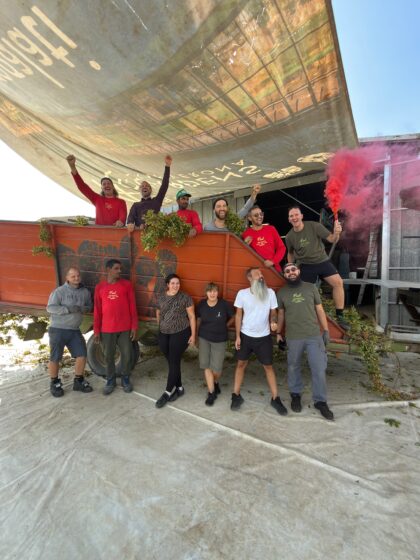
Harvest done.
Once again this year, we’ve wrapped up the hop harvest.
This is one of those moments that makes all the work worth it.
We’ve followed these plants for a whole year, watched them grow, waited for the right moment, and now we can finally reap what we’ve sown.
There’s always that mix of curiosity and anxiety when we open the first cones and smell them. We want to know right away what we’ve gotten out of a year’s work.
And then there’s the impatience to use it in our beers.
Now it’s time to celebrate: today from 5 pm at the Farm, and from September 28 to October 4 at the TapRoom and Casana.
PS: we’d left 400 bines of CRK3 in the field to see how it would change with a later ripening.
We liked it so much that in the end we picked them too.
We’re brewing up another Fresh Hop… Molto Original!
15.09.2026
Day 7
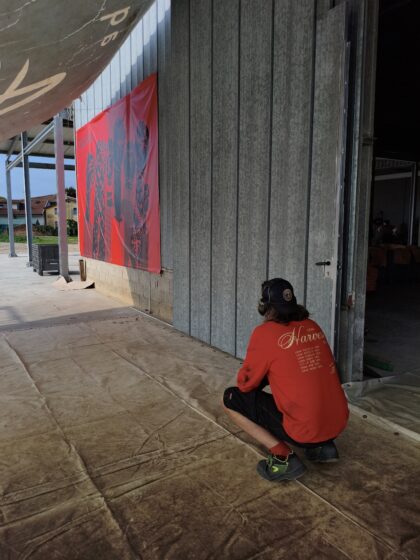
We set off for what, fingers crossed, should be the last day of harvest.
The machine is running well and, so far, we haven’t had any major hitches.
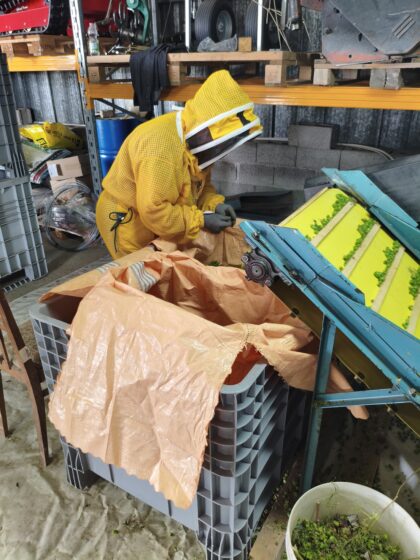
Except for a swarm from our apiary, which decided to come check in on how the harvest was going.
We couldn’t stop, so we pulled out the beekeeper suit and kept working for about an hour, waiting for them to head back to the hives.
They clearly wanted to check in on the harvest too.
Other than that, we push on.
The machine keeps running, the hops keep coming through, and we’re keeping our fingers crossed until the end. See you at 5 pm to celebrate the end of the harvest ✊
14.09.2026
Ten hours of work.
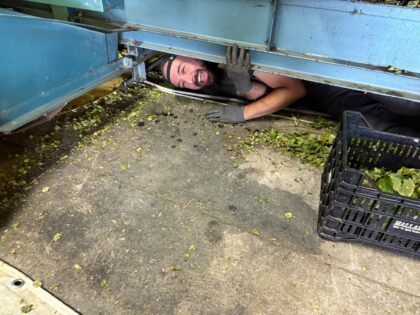
About six of them spent fixing breakdowns.
And yet today we harvested the hops from 1,400 bines.
At one point we even thought we might not get going again.
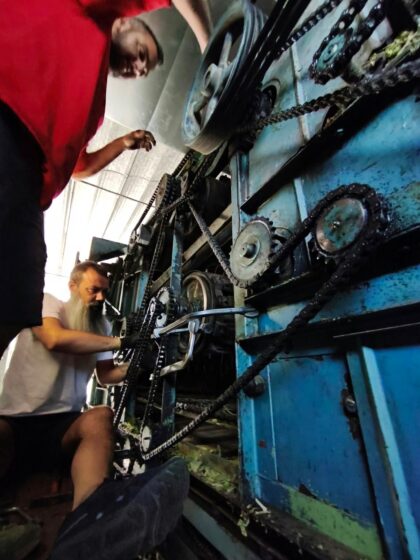
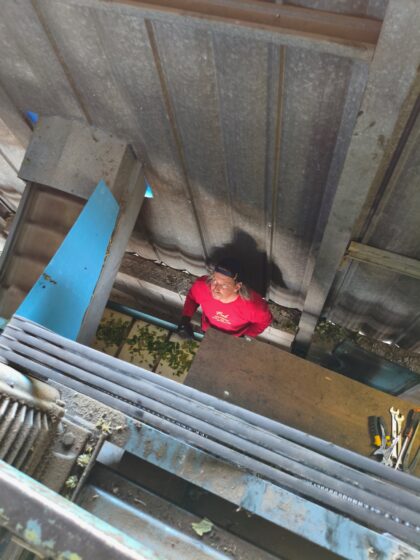
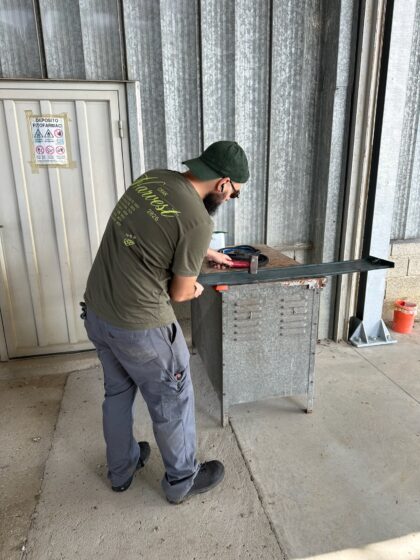
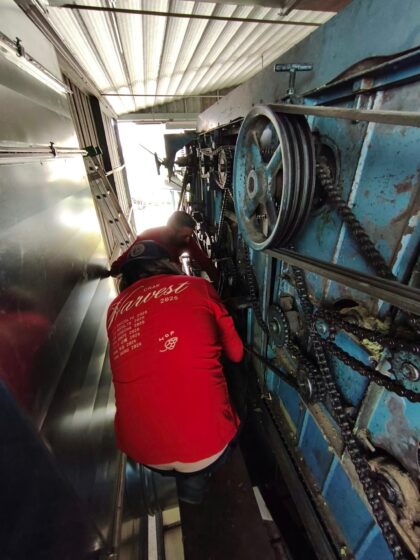
A pulley jammed and tore off a piece of the machine’s sheet metal. For a while it wasn’t at all clear whether we’d be able to fix it.
Then, with a lot of patience, Anthony’s creativity, Tony’s optimism, Cesare’s flexibility, and Matteo’s pinpoint precision with the welder, we rebuilt the part and got the machine running again.
It wasn’t over.
Chains came off, belts jammed, and more small breakdowns kept coming, one after another. But by then we were ready: we’d stop, figure out what wasn’t working, and fix it.
Six hours later, we’d still gotten the hops harvested.
Now we’ve earned a Guerrilla and a few hours of rest, before the last day of harvest.
Breakdowns permitting, at this point.
And if you want to see the 1968 machine in action, and see us completely covered in lupulin by the end of the day, we’ll be waiting for you at the Farm tomorrow from 5 pm until sunset.
Guerrilla on tap and the grill going.
14.09.2026
Day 6 – Ready, set, breakdown
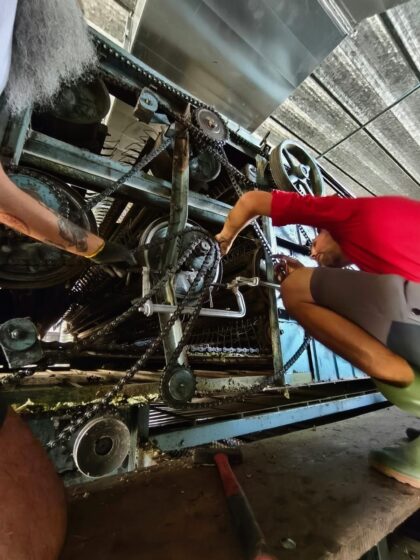
After about 20 minutes of stripping the hops, we started hearing some new noises.
When you’re working with a machine from 1968, you always have to keep your ears open: any unusual noise can mean something’s breaking. Or that it already has.
Now we’re stopping, trying to figure out what happened, and attempting to fix it.
The goal is to be back up and running within an hour, even though the fault looks fairly hard to fix quickly.
If we can’t manage it, we’ll have to rework the harvest calendar. Something we’d like to avoid as much as hail.
13.09.2026
Crak Harvest 2026 — Day 5
Every day we pick the hops, and before we can even think about the beer, we have to think about how to dry them.
We still don’t have our own dryer. So, once again this year, we have Lupfarm to thank — they’re right near the brewery and let us dry the hops we pick each day. It might sound like a small detail, but it completely changes how we organize the harvest.
The ripening window is narrow. We have to decide when to go into the field, how much to pick, and fit it all around Lupfarm’s drying days.
And then there’s the rain, which has already thrown off several plans and forced us to stop and let the field and plants dry out.
So we keep watching the hops, the weather, and the calendar. And by the end of the day, the harvest needs to already be ready for the next step.
Thanks to Lupfarm for giving us a hand again this year.
If you don’t know them yet and want to see what they do, you can learn more about them here: Lupfarm
13.09.2026
Crak Harvest 2026 — Day 4
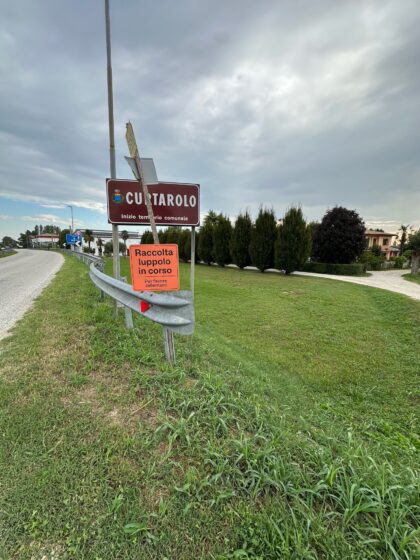
After four days of forced stoppage due to rain, today we’re back in the hop field.
We had to wait for the field and the plants to dry out enough to resume harvesting. But ripening kept moving forward in the meantime, so today is Sunday and we’re back at work.
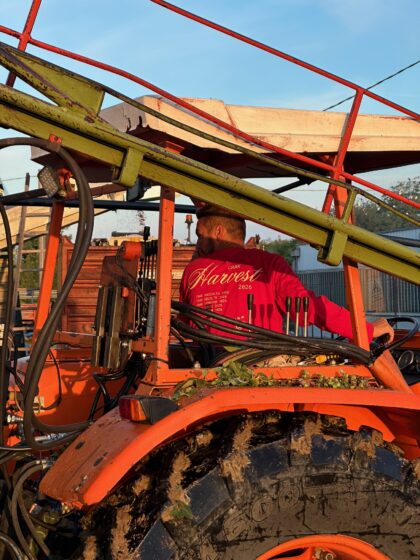
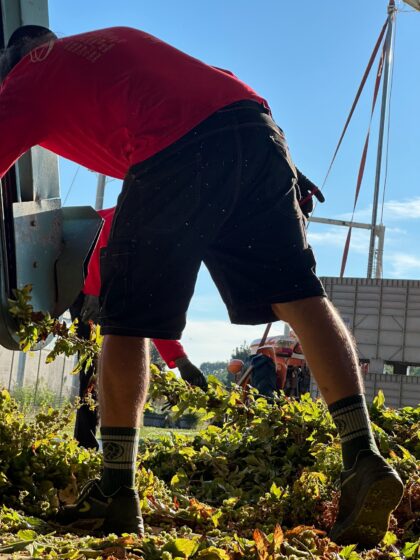
We’re harvesting CRK3.
It’s a variety with very small cones, but super aromatic. The plants in this area were more exposed to the heat, and CRK3 seems to have suffered from it more than other varieties. So the yield is lower: there are fewer cones per plant, and during selection we discard quite a few.
Not everything we harvest ends up at the brewery. Cones that don’t meet standard are discarded, so that only the hops we consider suitable go into the brew.
09.09.2026
Crak Harvest 2026 — Day 3
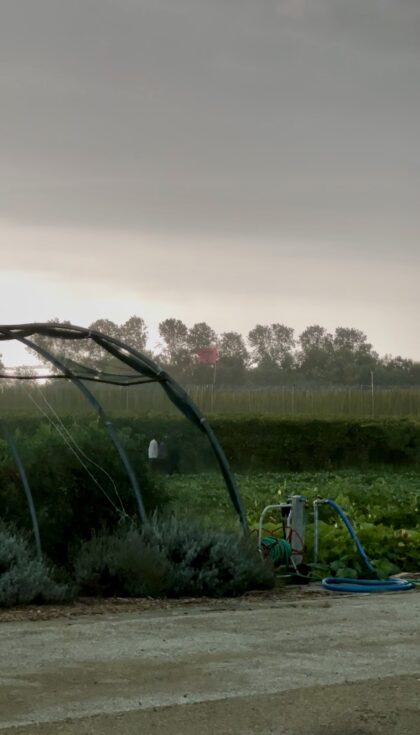
Since last night, there’s been only one topic in the harvest WhatsApp group: the rain.
Radar, forecasts, messages.
Is it raining? Isn’t it? Do we wait? Do we go?
This morning we got up early to decide whether to head into the field anyway. For a while it seemed possible, then the radar started changing again.
In the end, the answer came from the sky: about 25 mm of rain fell in half an hour.
At that point there wasn’t much to decide. With the field this wet, there’s no harvesting today.
And more rain is forecast for tomorrow.
Tomorrow we were supposed to open the Farm to everyone, with the grill going and a Guerrilla in hand, to spend some time together at the end of the harvest day.
But the forecast is forcing us to postpone that too. The harvest will most likely pick up again next week, and with it, the moment to celebrate the end of the harvest together.
For now, we keep watching the radar.
08.09.2026
Crak Harvest 2026 — Day 2
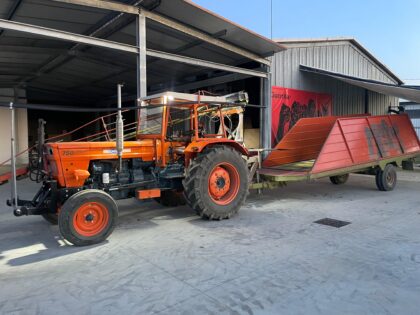
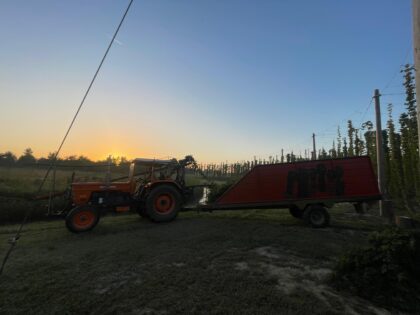
Yesterday we picked CRK1 all day long, without a single stoppage of the machine.
By the end we’d brought in about 10 rows, harvesting the hops right at the ripeness point we’d been waiting for.
This morning we set off again at 6:30 with CRK2.
This variety has also reached the right point, and today we want to pick as much of it as possible.
The window is still wide, but rain is forecast for the coming days and ripening will keep advancing. The moment we’re looking for is when CRK2 expresses the citrus notes we want, especially red orange.
We don’t want to wait too long and go past that point: push beyond it, and the aromatic profile can shift, bringing us different notes than the ones we’re looking for in our beers.
That’s why today it’s all about how much we manage to harvest.
07.09.2026
Crak Harvest 2026 — Day 1
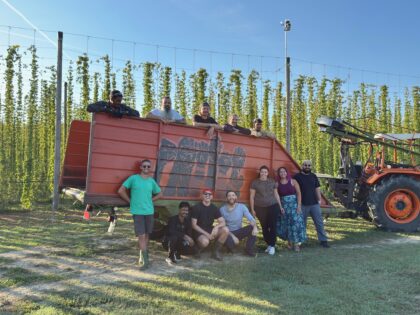
At 7 we met up at the Farm.
Machine ready, hop field in front of us, and a ritual photo to officially mark the start of the harvest.
Then we got everything set up and entered the first row.
The first bine went up onto the machine and we started picking.
After the past few days’ trial runs, today we finally get down to the real work.
Crak Harvest 2026: Day 1. Here we go.
03.09.2026 – Crak Harvest 2026 – Fresh Hop IPA
Even before the actual harvest began, we ran a preview.
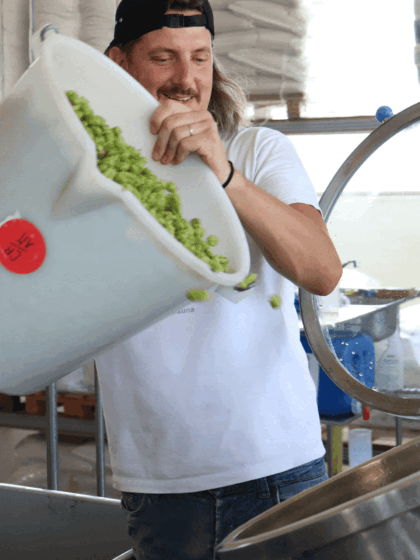
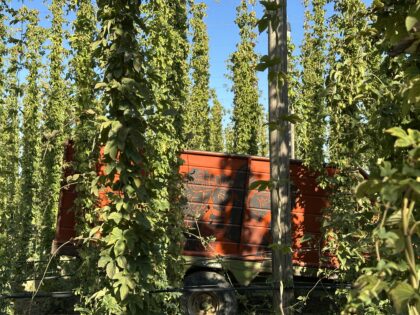
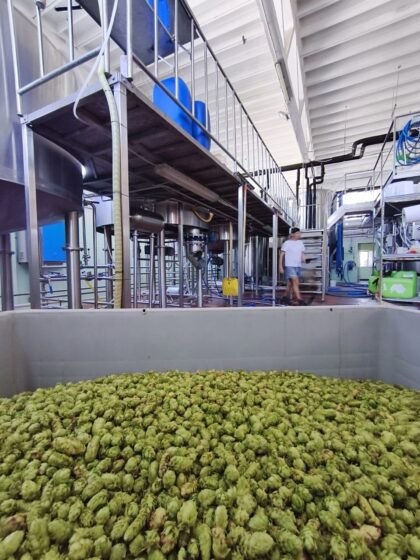
We selected 100 bines in the hop field and picked them to bring a first batch of fresh hops straight to the brewery.
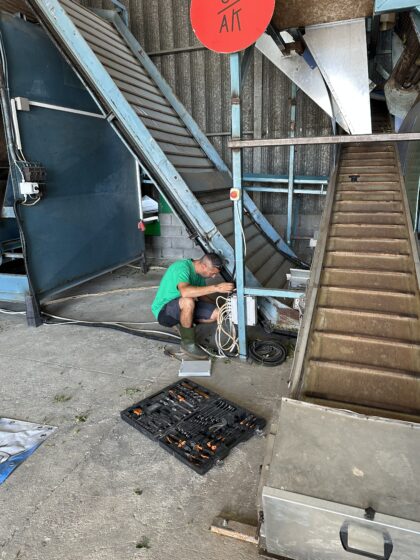
Not everything went smoothly. The harvesting machine gave us some trouble right away. It’s from 1968, but with the right maintenance it’s not afraid of hard work. So we took advantage of the day to get our hands in and fix what needed fixing.
We hope we’ve left it in perfect shape for Monday, when the real harvest begins.
Meanwhile, these 100 bines became the first brew of Crak Harvest 2026. Only 12 minutes passed from the moment of picking to the hops going into the brew.
The beer will be ready for Crak Harvestfest 2026, when we’ll celebrate the end of the harvest in the Taproom and in Casana ✊
02.09.2026 – Crak Harvest 2026 — We’re off
The harvesting machine is ready.
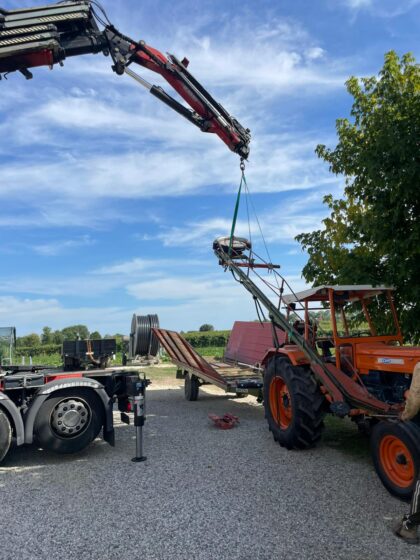
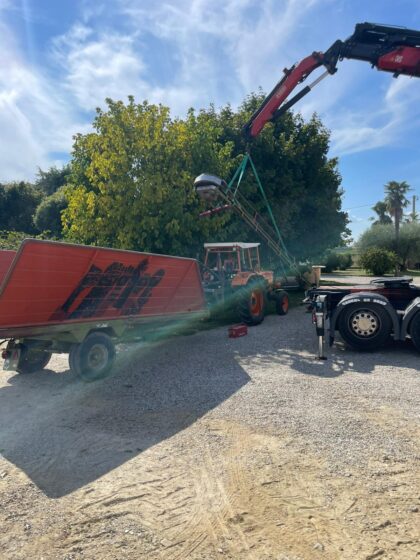
We mounted the arm and the trailer on the tractor and ran the first tests. For about an hour we had the machine running and also tested the new conveyor belt that carries the hops out during harvesting.
Everything works. Now we just need to see how it performs at full capacity.
Tomorrow morning at 8 we’ll be in the field. The goal is to already harvest the quantity needed for the Crak Harvest 2026 brew.
If everything goes smoothly, by 10:00–10:30 we’ll have the first crate ready to head to the brewery.
The harvest then continues in the following days: Monday, Tuesday, and Thursday we’ll be back in the hop field.
Here we go.
26.08.2026 – The Farm doesn’t wait for the harvest.
While we wait for the right moment to start the hop harvest, work on the Farm continues.
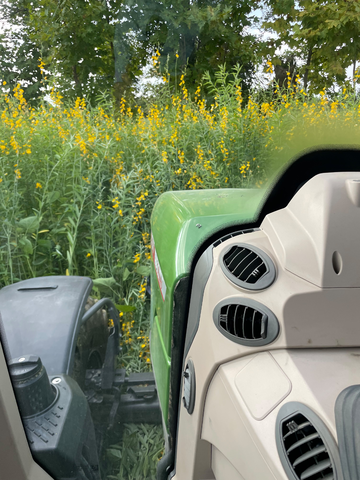
These days we’re finishing the cover crop cultivation, which has grown so much it’s almost taller than the tractor’s hood.
The cover crop helps us keep the soil covered during the period when there are no main crops, and once its cycle is complete, it helps work the soil ahead of the next planting.
Now we’re starting with the mowing. Then we’ll sow again.
We’re still waiting on the hop harvest. But there’s always something else that needs doing.
04.08.2026 – We’re in the period when the hops change every day.
These weeks we’ve been irrigating continuously. The soil is dry, and the water helps sustain plant growth right at the stage when the cones are starting to form.
Every pass through the rows is also a check-up. We look at how the cones are ripening, observe each variety, and compare development across the different plots. They don’t all follow the same timeline.
And, as every summer, we look up at the sky. Just a few minutes of hail can compromise work that began months ago. It’s part of our craft: farming also means accepting that, until harvest day, the weather always has the final word.
If the weather stays stable, we estimate it will be another twenty days or so before we start the harvest.
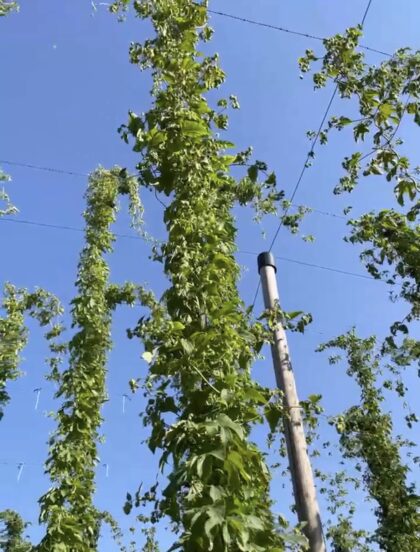
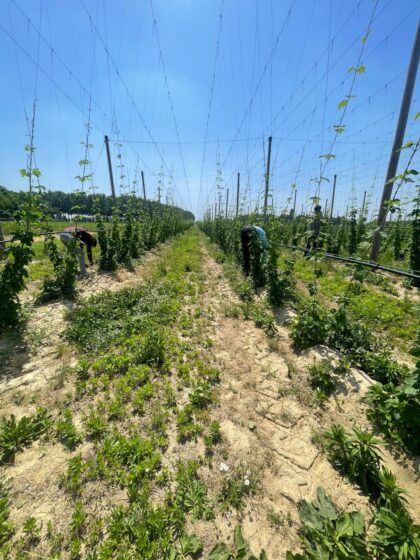
30.06.2026 – Today we headed to the Farm with most of the Crak team, officially to celebrate the release of Farm to Farm Molto Original, but also to take a closer look at the hop yard.
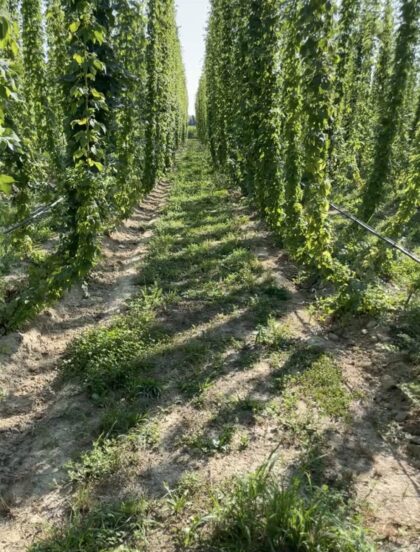
It’s incredibly hot, with record-breaking temperatures, but thanks to continuous drip irrigation we’re managing not to waste a single drop of water. The plants have now reached 6 meters in height and are entering the stage where the bines strengthen and flowering begins.
We inspected around 1.2 hectares: growth is uniform and the plants remain vigorous despite the heat. Over the next few days, we’ll keep monitoring the flowering and fine-tuning irrigation with precision.

19.06.2026 – Today, right as we launched the new Molto Original, we also kicked off the barley harvest. Conditions are good, dry soil and well-ripened grain, so we started combining without issues on about 12 hectares. This is the base of the beers we will drink in 2027, and for us it is always a key moment because everything starts here. In the coming days we will continue the harvest, aiming for consistent quality and yield.

25.05.2026 – Today in the field, the hops are giving us positive signs: all four varieties we grow are recovering well. The one that was most exposed to the hailstorm took a hard hit and is still a little behind, but it’s making a satisfactory recovery. Over the coming days, we’ll continue to monitor plant growth and response to better understand how the recovery is progressing.
12.05.2026 – Hailstorm on the farm.
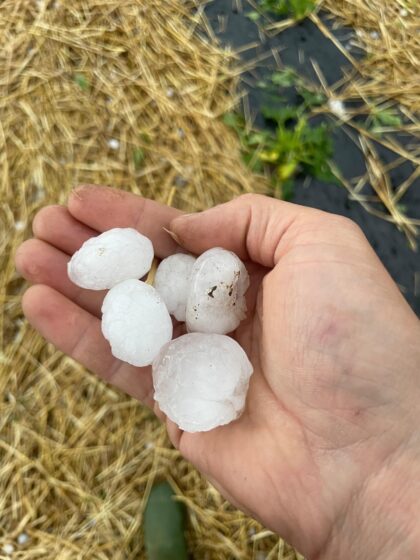
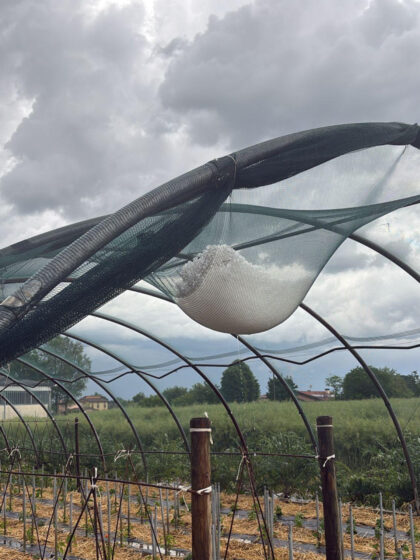
One year later, nature has once again put us to the test. A violent hailstorm, just like last year’s, hit our farm, breaking the apical shoots of the hops — the tallest and most promising ones we had been carefully following. Fortunately, the plants are vigorous and will react, but seeing weeks of work damaged in just a few minutes is hard to swallow.
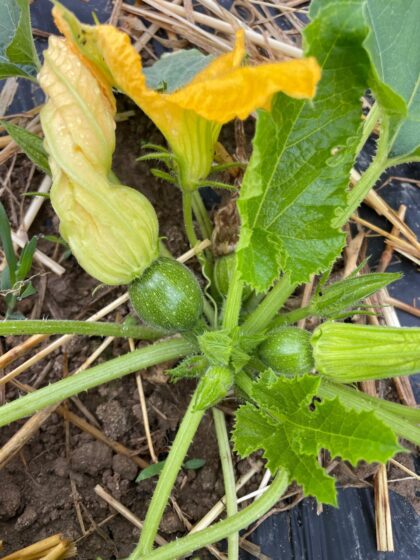
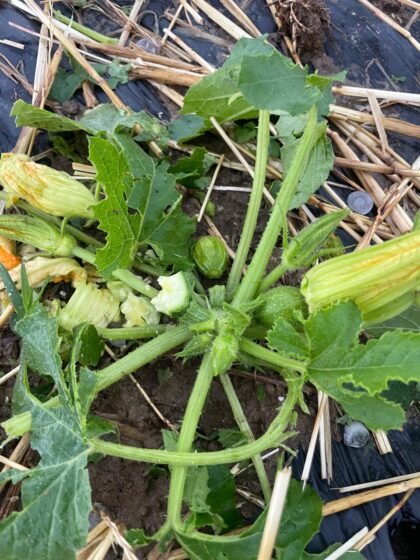
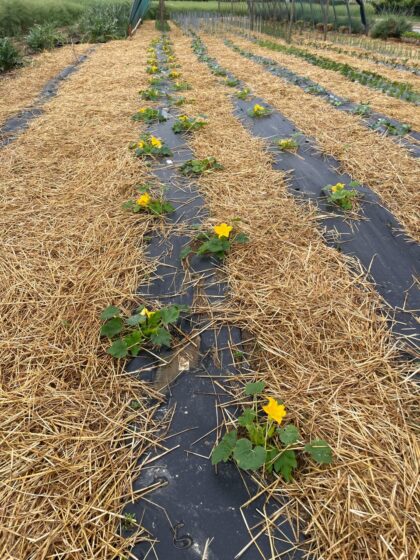
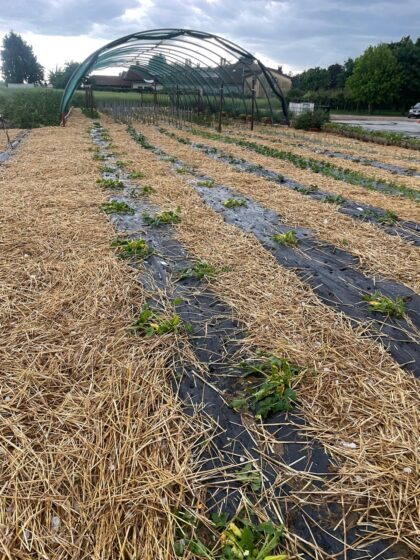
The vineyard and the vegetable garden were also damaged, especially the zucchinis. Some hailstones were several centimeters in diameter. And while we were assessing the damage, the storm still wasn’t over.
Now we’re evaluating the damage plant by plant and deciding on the next steps: where to prune to stimulate lateral regrowth, where to reinforce the hop supports, and how to recover the most heavily affected plants.
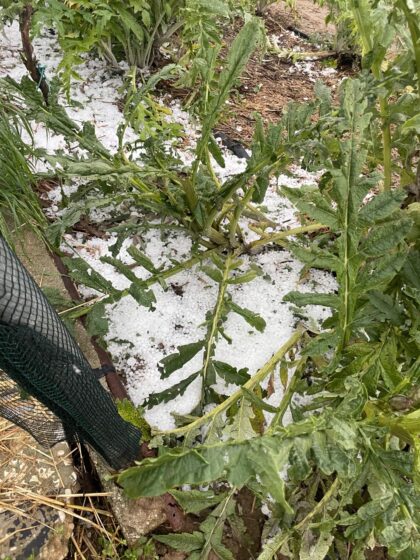
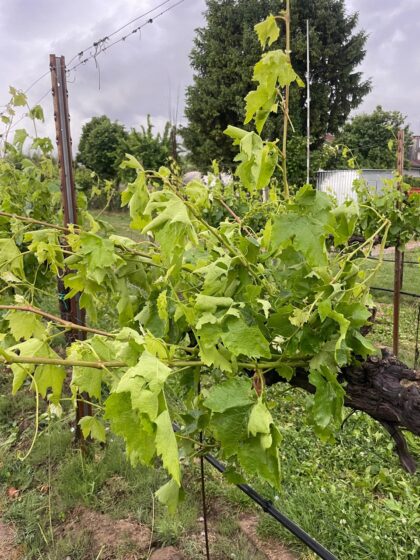
Before
After
Before
After
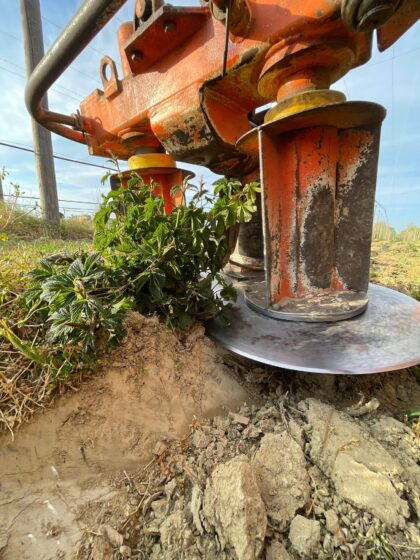
10.04.2026 – Today in the hop yard we’ve reached the moment to cut our hop plants: with the machine we cut them back almost at root level to make them regrow stronger for the new season.
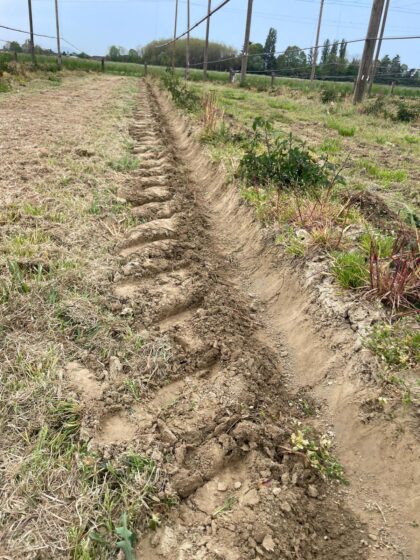
9.04.2026 – Today we’re in the middle of our hop yard working on breaking up the old ridges — removing and loosening the soil mounds around the plants to properly aerate the ground. This step is essential because tomorrow we’ll cut back the crown, removing the plant at root level to stimulate stronger regrowth. It’s a slow but important job to set up the new hop season in the best possible way and achieve more vigorous and uniform plants. Tomorrow we’ll tell you how the crown cutting goes and how the hop yard reacts to this “radical pruning.”
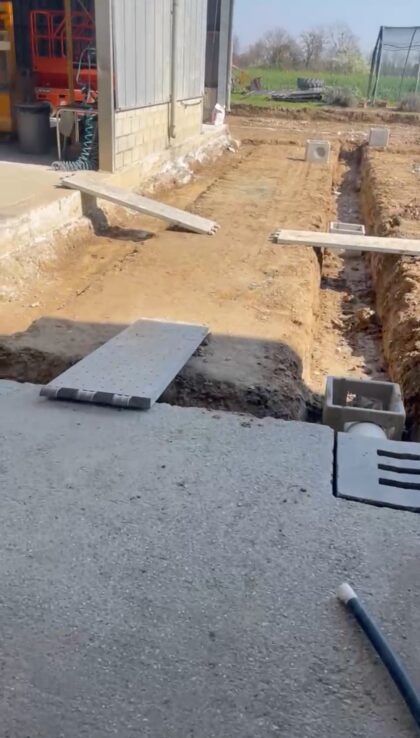
18.03.2026 – Today on the farm we’re working on the “behind the scenes” of the house and the agriturismo: finishing sidewalks and rainwater drains so that, when the storms arrive, the water will flow away without damaging the courtyards. On the other side of the construction site we’re pouring a new concrete slab — the base where the new building will rise, which we’ll use to shelter tractors and machinery. To make room for this work we moved the hop machine, because the farm also grows through the structures that allow us to work better all year round.
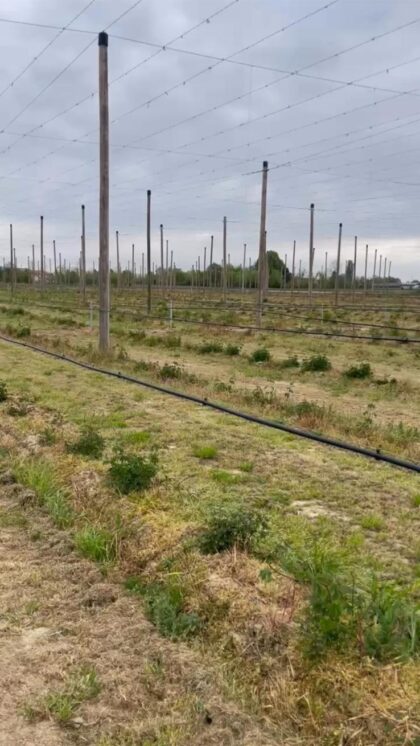
16.03.2026 – Today on the farm we lifted the drip line of the hop system: we equipped ourselves with new tools mounted ventrally on the tractor, so we can work between the rows and cut down a good portion of manual work. The hops are already coming back strong, with shoots almost “too” large for this time of year — a sign that the season is pushing ahead but needs to be watched carefully. In the coming days we’ll focus right on them, selecting the best shoots plant by plant to give strength only to those that will carry this year’s production.
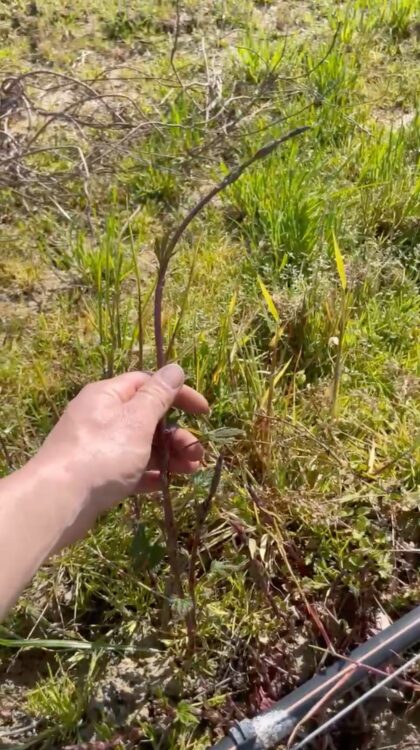
13.03.2026 – Spring has truly blossomed today between the rows: the green ground cover has lit up with dandelions and small daisies, a flowering carpet stretching from one end of the vineyard to the other. The soil is nice and dry after the sunny days, allowing us to enter with the tractor without leaving heavy marks. Keeping this spontaneous flora helps us protect the soil and bring more beneficial insects into the vineyard. In the coming days we’ll consider only a light mowing, just enough to accompany the growth of the vines without taking color away from the farm.
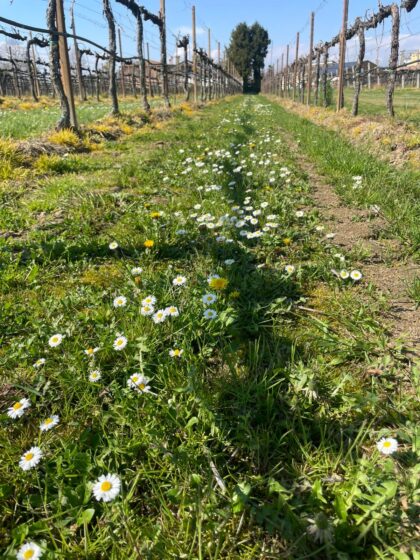
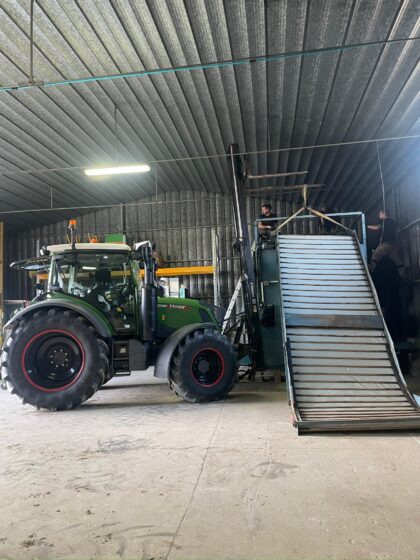
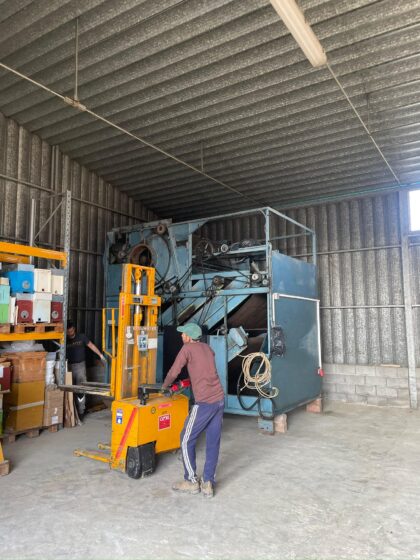
05.03.2026 – We barely had time to assemble it in September for the hop harvest, and here we are already taking the machine apart and moving it back into the warehouse.
The upside? After screwing and unscrewing it so many times, we’re learning every one of its secrets: at the next harvest we’ll all be working in the shade — us next to the machine and the hop cones always fresh, without gazebos and umbrellas flying away in the wind anymore.
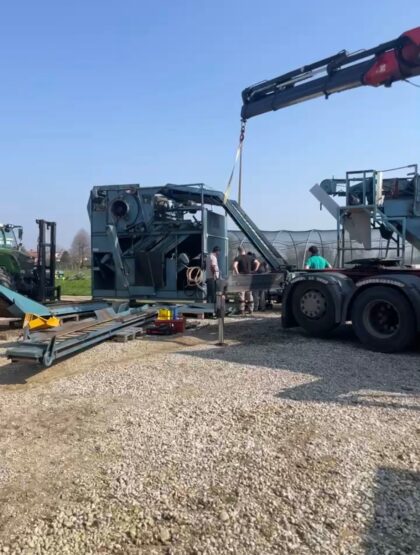
27.09.2025 – We used all the time we had to relive two special weeks, immersed in the harvest of our new hop yard, right next to the brewery.
This isn’t a video designed to follow the rules of the algorithm: it’s not short, there’s no pumped-up music—just real sounds and noises, curses and emotions exactly as we experienced them.
We’re leaving it as it is, simple. The rest will be found in the beers that are on their way. ✊
31.10.2025 – Yesterday we raced against time to finish harvesting the second-crop soybeans before the rain. The day ended with a yield of 30 quintals per hectare—an excellent result for this type of crop. A small accident halted work in the evening, but nothing serious.
About a dozen hectares remain to be harvested, where a cover crop of crimson clover will be sown ahead of the spring corn, to improve crop rotation and reduce the use of pesticides. Now we’re waiting for good weather to return so we can proceed with the sowing of two-row barley and the maintenance of ditches and field drainage.

17.09.2025 – It’s done! We’ve just finished the 2025 harvest: thirteen intense days that taught us so much, and we can’t wait to experience it all again next year… maybe together with you, with a big harvest celebration!

16.09.2025 – This morning Marco showed up on his bike with two buckets turned into side bags, packed with hop samples to test using our barebones setup — a scale and a microwave — simple, but it never lets us down. And that’s how we kick off what could be the second-to-last day of harvest. Everything depends on the pace we can keep out in the field today: the tiredness is real, but the energy’s still there, and the bold hop aromas push us forward, step by step, toward the finish line ✊


15.09.2025 – We’re back at it! After a few adjustments, we’re back in the field.
Today we’ve got extra space for drying, so a harvest twice the size of the past few days awaits us. It’s going to be a long day, but surrounded by these hop aromas it’s no sacrifice at all – on the contrary, it’s a pleasure to experience it to the fullest ✊


12.09.2025 – False start! 🚜⚡️ An electrical component broke down, so no harvest today either. We’ll try again on Monday.
12.09.2025 – After two days of forced stop, we’re finally back in the field!
The ground’s still wet, but with a bit of care it’s workable. In the meantime, we used the break to tweak the machine one last time. Now everything’s set: harvest is back on ✊


11.09.2025 – Since yesterday at 3 PM the rain has finally stopped, and the ground is slowly — very slowly — drying up. We’re hoping for a sunny day that will let us get back into the field tomorrow morning or, at the latest, on Saturday.
10.09.2025 – Harvest on pause today: heavy rain hit us hard, with over 80mm falling in just a few hours. The field is a swamp and it’s unlikely we’ll be able to restart tomorrow. All eyes on Friday now, hoping the weather finally gives us the green light to get back among the bines.

09.09.2025 – A few drops of rain here and there, but the forecast says we should be good to finish today’s harvest. The cloudy sky is actually a big win: freshly picked hops don’t get hit by the heat, and we don’t have to stress about rushing them into the shade… sounds easy, but trust us, it’s not.


06.09.2025 – Today we had a real scare: the Monte Taburno harvest was almost lost. The machine broke down and for 5 hours we just couldn’t get it running again. With hops there’s no waiting—cones need to be dried within a few hours of picking, otherwise it’s game over.
In the end we made it ✊ and even got treated to a rare show: the hop machine running under the moonlight. Not something you see every day!
Now it’s time for a break with a fresh IPA — we’ll be back on Monday.

06.09.2025 – In the middle of harvest, the chain that feeds the bines into the hop machine snapped. Just when you think everything’s running smooth, the unexpected shows up right on time. Now the priority is to fix it as quickly as possible—nature doesn’t wait, and the harvest has to be done on schedule. Fingers crossed we make it ✊

06.09.2025 – No field harvest today: the stars are the hop cones that just arrived from Benevento. Picked yesterday and delivered here at dawn, after an overnight trip in a refrigerated truck from Monte Taburno – the same mountain where our Tenuta Solofrana wines and our EVO oil are born.


05.09.2025 –Harvest 2025 powered by the sun – Yesterday’s harvest was brought in 100% with the energy from our solar panels. From the machine separating the cones to all the electric-powered gear, everything ran on our own self-produced electricity. Zero pull from the grid: a 100% solar powered harvest that feels even better—for us and for the planet ✊

04.09.2025 – These are the hop rows we can bring in during a day: the right pace to keep the kiln happy and get a dried cone that’s neither too much nor too little, but just perfect. In the next few days, with this fresh hop, we’re diving straight into a brew of Giant Step Verde ✊

04.09.2025 – Harvest 2025 is on! The very first from our new hop yard at the Farm, right next to the brewery. After a quick briefing with the new machine, we jumped straight into the field and started picking. It’s a special moment: after years of work, we’re finally bringing in the fruits of this project. Challenges will come, but we’re ready—these hops will soon be in the beers you’ll be drinking!


27.08.2025 – Our hop yard has never looked this good! The plants are lush, and the cones are getting close to their ideal ripening point, but we’re not quite there yet. We’re carefully monitoring cone moisture with our instruments, combining technology with the experience gained during the many selections we carried out in the Yakima fields in the United States. That hands-on training taught us how to recognize the signs that come right before perfect maturity.
The harvest window will open in just a few days. Now comes the most delicate part of our work: pinpointing the exact moment. If we harvest too early, the hops will lack flavor. If we wait too long, they’ll lose all the finest aromas needed to brew an exceptional beer.


08.08.2025 – About a month to go until harvest, and the hop field is at the peak of its energy.
The cones are beginning to tighten, and the aroma in the air is growing more and more intense.


16.07.2025 – It’s a lively time in the garden we cultivate for some of the dishes prepared in the Trattoria, Taproom, and Casana: the yellow cherry tomatoes are starting to change color. Among the still-unripe green ones, a few bright yellow tomatoes are beginning to appear — a sign that the sun is doing its job.
The plants are thriving, and the path through the mulched tunnels has now become a small green corridor.


08.07.2025 – Our hop yard has reached the top — it’s grown to 6 meters and is looking strong and healthy.
We’re now inter-row tilling to remove the weeds and continue mounding soil around the base of the plants. We can definitely say they’re thriving and getting ready to bloom!

02.07.2025 – Accidents that can happen at a Farm Brewery. No one was hurt—except our Fiat OM 750 Special—but luckily, nothing serious ✊


19.06.2025 – Today we’re mounding up the soil to control weeds, support plant growth, and improve irrigation.


03.06.2025 – About a month after the severe hailstorm that hit us, the hop field has made a remarkable recovery. Apart from a few plants that were particularly “wounded,” all the others are growing vigorously and quickly climbing toward 6 meters in height.


16.05.2025 – It seemed like a quiet day… until a few (thousand) bees decided it was time to start a new colony and go in search of a new home. Nothing unusual: the climate is favorable, and there’s no shortage of nectar and pollen at the Farm.


Live from the Farm
07.05.2025 – A fine yet intense hailstorm put our vineyard to the test, forcing us to replant many of the young vines.
It wasn’t easy to watch months of work be compromised in just a few minutes, but perhaps all is not lost. If the weather is on our side, there’s still time to bring the vineyard back to life.


22.04.2025 – After days of alternating rain and sunshine, our hops have started climbing (they should reach 6 meters in just a few weeks).
Meanwhile, in the vineyard next to the hop field, the first grape clusters are beginning to form.


16.04.2025 – This morning our bees welcomed us with this spectacular swarming.

11.04.2025 – After pruning, we begin to stretch the wires—around 20,000 of them—where the hop vines will climb, reaching up to 6 meters in about 90 days. Now, we just have to wait for the rain forecasted for next week.


09.04.2025 – We’ve finished harvesting our “burscandoli.” Now we’re pruning all the shoots to prevent potential frost damage and to encourage the plant to grow stronger, later sprouts that are better for production.
By the way, the bruscandoli will be featured in new dishes at the Trattoria very soon!

01.04.2025 – How long does it take to gather 15 kg of wild hops? After 12 hours and a lot of patience, we got the answer.

27.03.2025 – We are replacing the vines removed last season due to fungal diseases. A necessary intervention to ensure the vineyard’s health, part of the many tasks that mark the beginning of spring. This is the right time to do it, taking advantage of rising temperatures while dealing with the weather, which can always hold surprises.

26.03.2025 …and with the arrival of spring comes the first swarm of the season; now we’re off to retrieve it.
By the way: if you spot a swarm, don’t disturb it and contact a beekeeper—they’ll know how to handle the situation safely.

24.03.2025 – We have entered the peak activity season of our bees, and with the first honey harvest, the annual brewing of Allirreug will also take place.


21.03.2025 – The orchard is in bloom. There are about 200 plants of peaches, nectarines, flat peaches, apricots, cherries, and plums. We are taking care of them to achieve a harvest that will allow us to make plenty of sour beer with our fruit… hoping for a favorable season and weather!


20.03.2025 –
Spring awakens our hop field. We’ll have to wait until September for the hop harvest, but in the meantime, it gives us a special gift: wild hop shoots! The first precious and tender sprouts that will be transformed into extraordinary dishes by our chef Nicola Cogo. From the Farm to the Trattoria.


What's at the Farm?
Barley
At our Farm (agricultural estate), we grow two-row barley, commonly also called brewing barley.
Growing barley allows us to know and control it from its very origin, and to gain a deeper understanding of the raw materials we use.
Growing barley allows us to know and control it from its very origin, and to gain a deeper understanding of the raw materials we use.

Luppoleto
We have started an experimental hop field in pursuit of researching new varieties and expanding our horizons. Experimentation and research have always been at the core of our work, and hops are the raw material that most defines our beers.
Our hop field allows us to study in the field and put various techniques into practice, as well as to directly assess how climate, territory, and harvesting methods affect our beers.
This experience then enables us to consciously select the best hops in the world.


Vineyard
At our Farm, just a few minutes from the brewery, we cultivate nearly three hectares of Glera, surrounded by a 6-meter-high hop field that influences its ripening and aromas, to produce our Prosecco DOC, Tenuta Bembo.
In the lands of Mount Taburno, at Tenuta Solofrana, we grow various types of grapes: Coda di Volpe, Falanghina, and Aglianico, with which we produce corresponding types of wine.
Frutteti
We cultivate naturally and harvest fresh fruit (apricots, cherries, apples, peaches, plums) from our orchard to use in some of our mixed fermentation beers from the Cantina project.
Using our own fruit allows us to pick it by hand, selecting it in the field and respecting its ripening times.


Bees
Both for ethical and functional reasons, we have installed beehives among our orchards.
This has allowed us to embark on a beekeeping experience that, in addition to promoting the pollination of fruit trees (improving qualitative yield), enables us to harvest excellent natural honeycomb honey, which we use in the production of some of our beers.
This has allowed us to embark on a beekeeping experience that, in addition to promoting the pollination of fruit trees (improving qualitative yield), enables us to harvest excellent natural honeycomb honey, which we use in the production of some of our beers.
